
 EN
EN



Best Materials for Coffee Capsule Packaging: How to Choose the Right Solution for Your Business
Introduction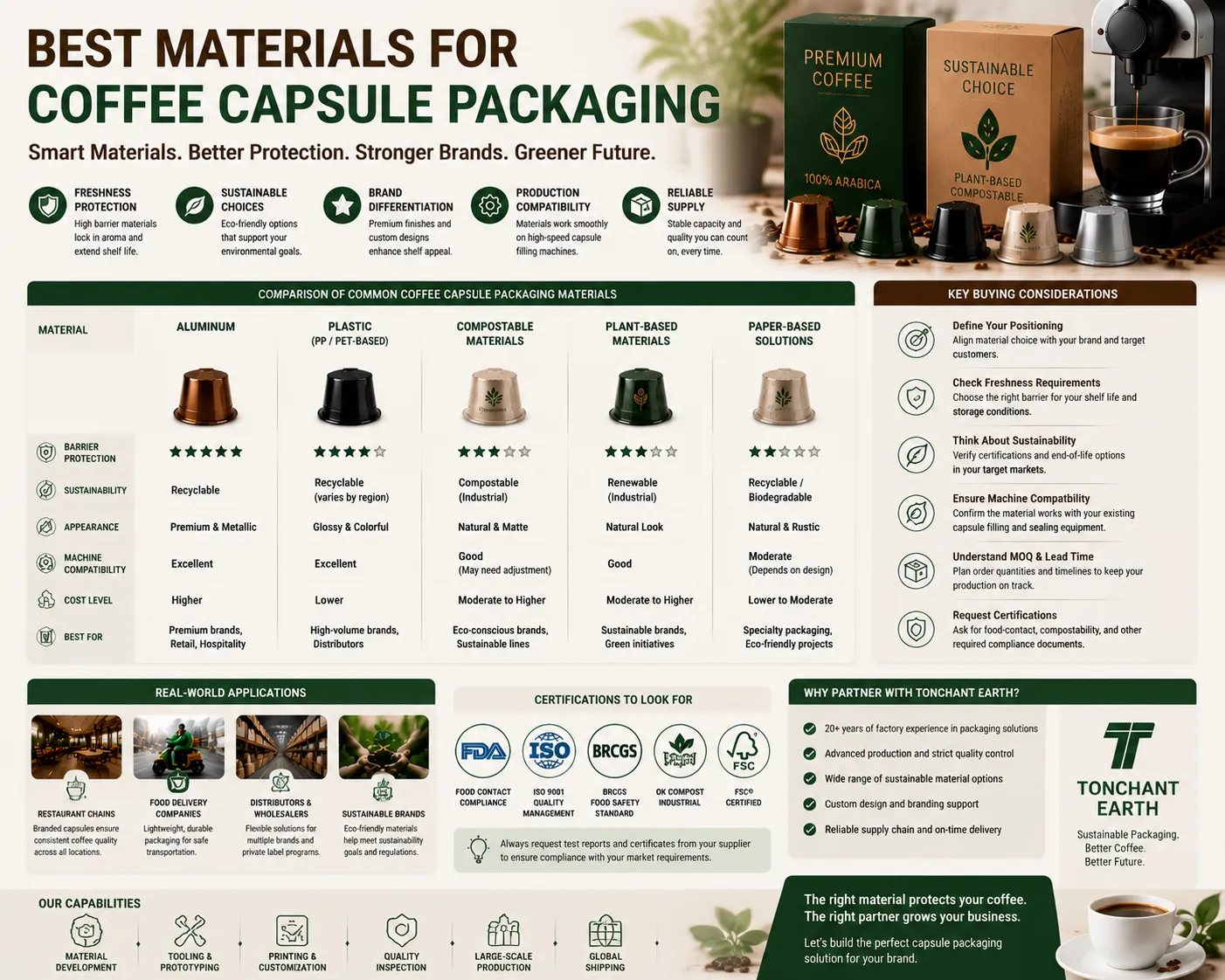
The coffee capsule industry is no longer limited to home consumers. In recent years, more restaurants, hotels, retailers, coffee distributors, and food service companies have introduced capsule products as part of their beverage strategy.
For many businesses, the coffee itself is only one part of the product experience. The packaging has become equally important.
A coffee capsule needs to do several jobs at the same time. It must protect freshness, survive transportation, meet food safety requirements, support branding, and increasingly, address customer expectations around sustainability.
That makes choosing the right coffee capsule packaging materials a critical business decision.
A restaurant chain launching its own coffee capsule line may care most about consistency and reliable supply. A specialty coffee company selling online may focus on premium appearance and shelf appeal. A sustainable packaging buyer may need compostable materials with proper certifications for specific markets.
The challenge is that there is no universal “best” material. Aluminum, plastic-based materials, compostable options, and plant-based solutions all have different strengths. The right choice depends on production volume, target customers, distribution channels, and long-term brand goals.
Before placing an order, experienced buyers usually consider questions such as:
-
Will the material protect coffee quality throughout its shelf life?
-
Can it run smoothly on our capsule production equipment?
-
Does it meet food-contact and environmental requirements?
-
What is the MOQ for customized packaging?
-
Can the supplier maintain stable production as demand grows?
These questions are especially important for companies planning long-term capsule programs rather than short-term product launches.
With factory experience in coffee packaging development, Tonchant Earth works with brands and businesses to evaluate material performance, production requirements, and sustainable options before they commit to large-scale manufacturing.
This guide explains the major coffee capsule packaging materials available today, their advantages and limitations, and what buyers should consider before making a final decision.
What Are Coffee Capsule Packaging Materials?
Coffee capsule packaging materials are the materials used to manufacture and protect single-serve coffee capsules. They are responsible for maintaining coffee freshness while also providing the structure needed for filling, sealing, transportation, and retail presentation.
A complete capsule packaging system may include:
-
Capsule body material
-
Sealing film or lid
-
Printed packaging surfaces
-
Outer cartons
-
Shipping protection
While consumers often focus on the coffee flavor, packaging performance directly affects the final drinking experience.
Coffee is sensitive to oxygen, moisture, and light. If packaging cannot provide sufficient protection, aroma and flavor can decline before the product reaches the customer.
At the same time, packaging has become a marketing tool. A well-designed capsule can help a product stand out on a retail shelf or create a stronger impression when customers open an online order.
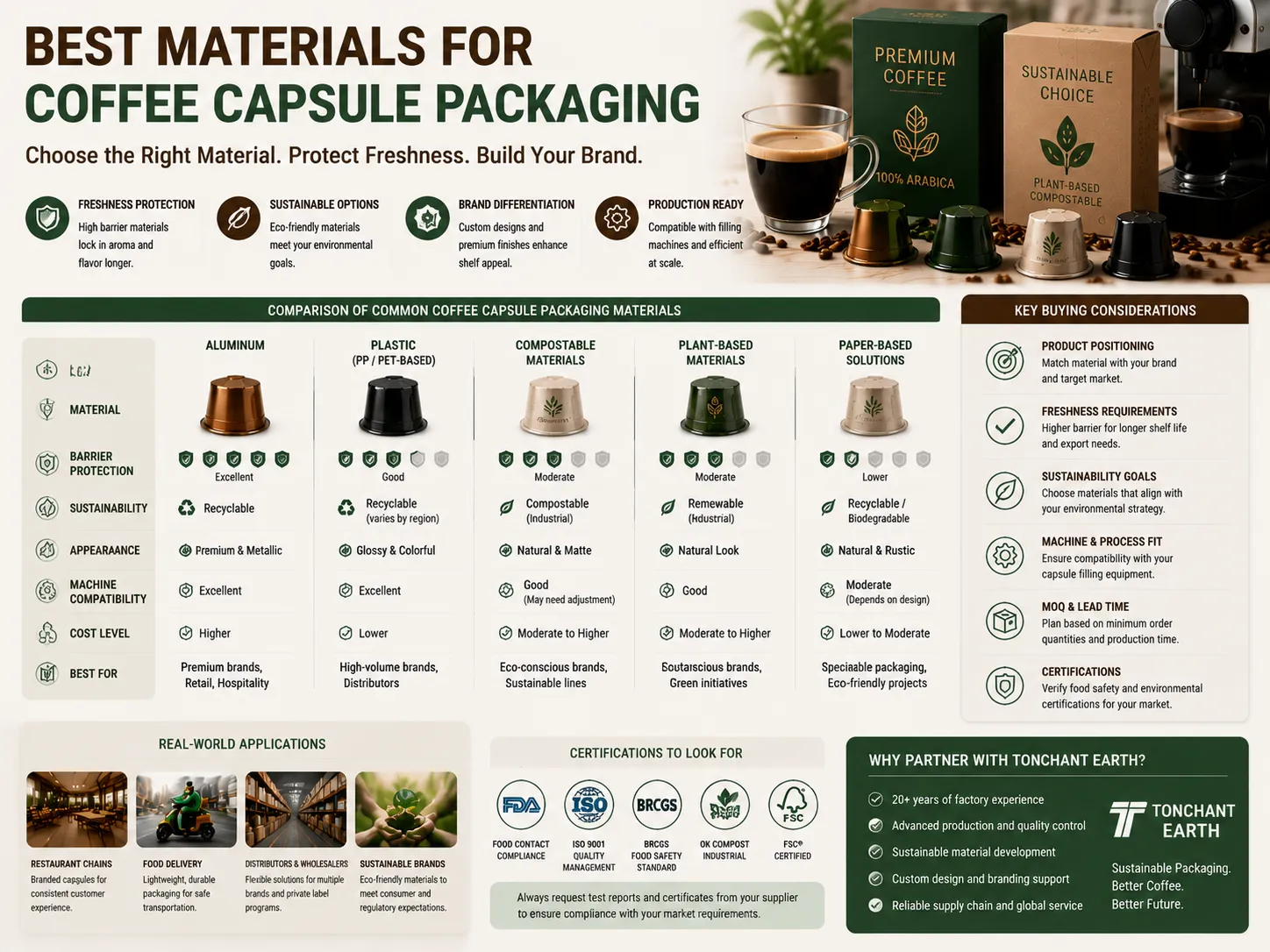
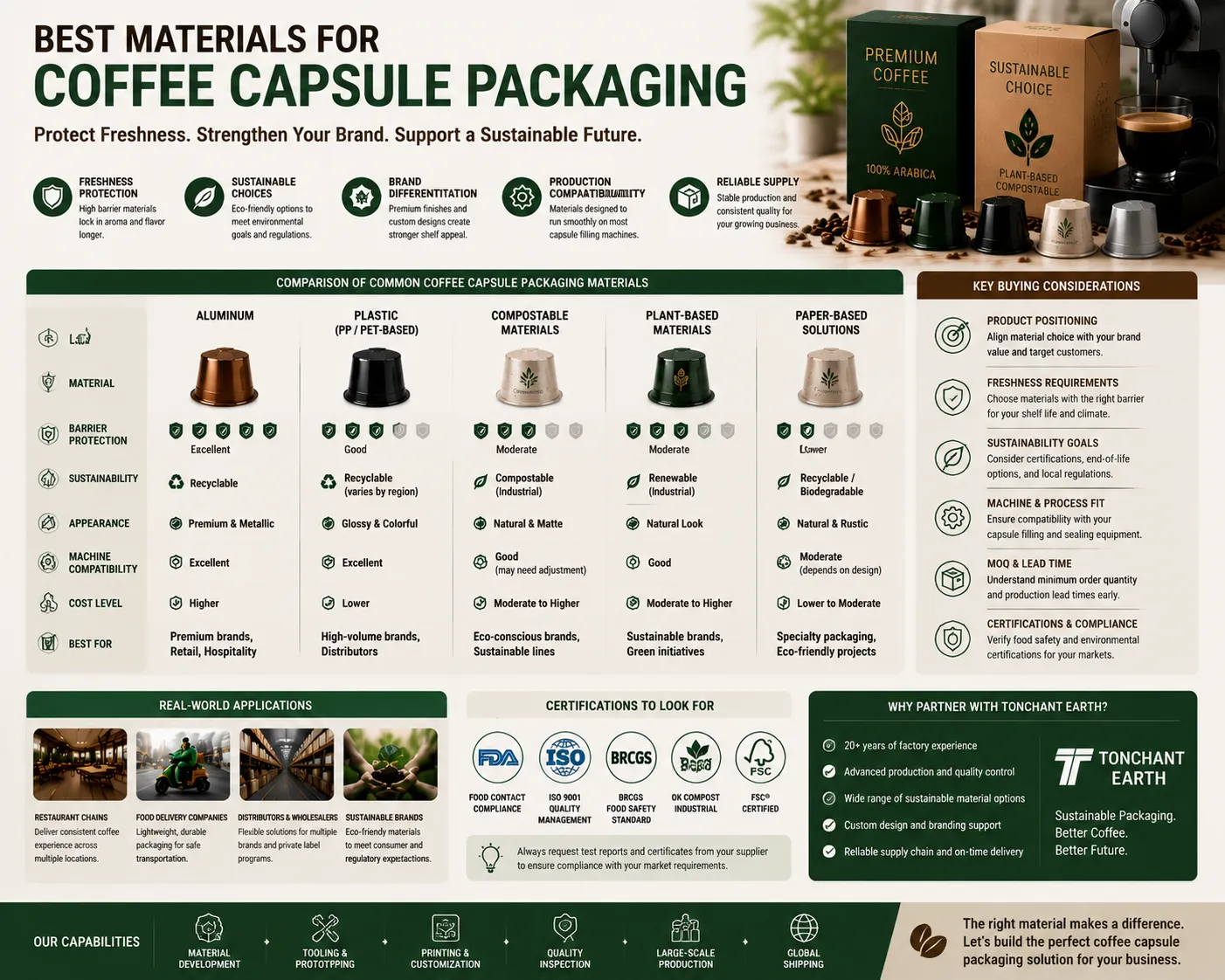
Main Coffee Capsule Packaging Materials Comparison
| Material | Advantages | Challenges | Common Applications |
|---|---|---|---|
| Aluminum | Excellent barrier performance, premium appearance, recyclable | Higher material cost | Premium coffee brands, retail products |
| Plastic-based materials | Lightweight, affordable, easy to process | Recycling options vary by region | Large-volume coffee production |
| Compostable materials | Supports sustainability positioning | Requires careful testing and certification | Eco-focused brands |
| Plant-based materials | Renewable material options | More complex sourcing | Sustainable product lines |
| Paper-based materials | Natural appearance, reduced plastic perception | Requires additional barrier protection | Specialty packaging projects |
Choosing a material should not be based on one factor alone. A low-cost option may create problems if it affects shelf life or cannot support the company’s sustainability claims.
Key Benefits of Choosing the Right Capsule Packaging Materials
1. Protects Coffee Freshness
Freshness is one of the biggest reasons businesses invest in quality packaging.
After roasting, coffee slowly loses aroma when exposed to oxygen. Moisture can also affect flavor stability and product performance.
The right packaging material helps maintain:
-
Aroma retention
-
Flavor consistency
-
Longer shelf life
-
Reliable brewing results
For example, a hotel group supplying coffee capsules in guest rooms may need products that remain stable for months in storage. A capsule that performs well only immediately after production is not enough.
2. Helps Build a Stronger Brand Image
Packaging is often the first physical interaction customers have with a product.
A premium capsule design can communicate quality before the customer even prepares the coffee.
Different materials create different impressions:
-
Aluminum often feels premium and modern.
-
Compostable materials communicate environmental responsibility.
-
Customized designs help private-label brands stand apart.
A coffee subscription company competing online, for instance, may use unique capsule packaging to create a memorable unboxing experience and encourage repeat purchases.
3. Supports Sustainability Goals
Sustainability is one of the most important trends shaping the coffee capsule industry.
Many companies are actively searching for:
-
Compostable capsule materials
-
Recyclable solutions
-
Reduced plastic packaging
-
Lower-impact manufacturing options
However, sustainable packaging decisions require careful research.
A material should not only look environmentally friendly. It also needs to meet practical requirements:
-
Does it protect coffee quality?
-
Can it run on existing production equipment?
-
Are certifications available?
-
Is there a reliable supply chain?
A restaurant group may want compostable capsules for its sustainability program, but if the material creates sealing problems or inconsistent production, the business may face unexpected costs.
Tonchant Earth has factory experience working with different packaging materials and helps customers evaluate sustainability options based on real production conditions.
4. Supports Different Business Models
Different companies have different packaging priorities.
A distributor supplying multiple coffee brands may focus on cost efficiency and supply stability.
A premium coffee brand may prioritize customization.
A food delivery company may need packaging that is lightweight and durable during transportation.
The right material helps businesses match packaging performance with their actual operating environment.
5. Improves Supply Chain Planning
Packaging decisions also affect sourcing.
Buyers should consider:
-
Material availability
-
Production capacity
-
Lead times
-
Shipping requirements
-
Future demand growth
A supplier with strong manufacturing experience can help prevent problems such as unexpected delays or material shortages.
Applications of Coffee Capsule Packaging Materials
Restaurant Chains and Hospitality Businesses
Large restaurant groups and hotels need consistency across locations.
A centralized capsule program allows them to control:
-
Coffee quality
-
Portion size
-
Product appearance
-
Customer experience
For example, a hotel chain may create branded coffee capsules for guest rooms. The packaging needs to match the brand image while maintaining reliable performance during storage.
Food Delivery Companies
Food delivery companies are increasingly expanding beyond prepared meals.
Packaged coffee products can create additional revenue opportunities because they are:
-
Easy to store
-
Simple to ship
-
Suitable for bundled offers
However, packaging must be strong enough to handle transportation.
A company shipping thousands of breakfast packages each month may prioritize lightweight materials that reduce shipping costs without sacrificing protection.
Distributors and Wholesalers
Distributors often have more complex purchasing requirements.
They may need:
-
Different capsule formats
-
Multiple packaging styles
-
Private-label support
-
Flexible ordering options
For these buyers, supplier reliability is just as important as the packaging itself.
A supplier that can provide consistent quality and stable delivery helps distributors maintain relationships with their customers.
Sustainable Packaging Buyers
Companies with sustainability goals usually evaluate packaging from a broader perspective.
They may consider:
-
Material sourcing
-
Environmental certifications
-
Manufacturing processes
-
Disposal options
For these buyers, packaging is part of the company's overall sustainability strategy rather than simply a product component.
Buying Guide: How to Choose the Best Coffee Capsule Packaging Materials
1. Define Your Product Positioning
Before selecting materials, understand your market.
Ask:
-
Is this a premium product or a high-volume product?
-
Who will buy it?
-
Where will it be sold?
-
Is sustainability a key selling point?
A boutique coffee company and a supermarket supplier will usually need different packaging strategies.
2. Evaluate Barrier Performance
Coffee packaging must provide protection against:
-
Oxygen
-
Moisture
-
Light
-
External contamination
Ask suppliers about:
-
Material specifications
-
Shelf-life testing
-
Barrier performance data
Packaging should protect the coffee from the factory to the final customer.
3. Check Production Compatibility
A common sourcing mistake is choosing a material first and checking equipment compatibility later.
Before selecting a material, confirm:
-
Capsule dimensions
-
Filling requirements
-
Sealing conditions
-
Machine compatibility
This is particularly important for businesses moving from traditional materials to compostable solutions.
4. Review Customization Options
Many businesses want packaging that reflects their brand.
Customization options may include:
-
Capsule colors
-
Printed lids
-
Logo placement
-
Outer box design
-
Special finishes
However, customization affects cost and production planning.
Buyers should discuss these details early to understand the impact on MOQ and delivery schedules.
5. Understand MOQ Requirements
MOQ is one of the most common concerns during packaging sourcing.
Standard materials often allow smaller orders because production is already established.
Customized materials usually require higher quantities because suppliers may need:
-
Special production setup
-
Custom printing
-
Dedicated material preparation
-
Additional testing
Before ordering, ask:
| Question | Why It Matters |
|---|---|
| What is the capsule MOQ? | Helps estimate investment |
| What is the packaging MOQ? | Affects inventory planning |
| Are samples available? | Allows performance testing |
| What is the production lead time? | Helps plan product launches |
A growing coffee brand may begin with standard materials and move toward customized packaging once sales volume becomes predictable.
6. Confirm Certifications
Certification requirements vary depending on the market.
Common considerations include:
| Certification / Standard | Purpose |
|---|---|
| Food-contact compliance | Confirms packaging safety |
| Compostability certification | Supports environmental claims |
| Recycling standards | Verifies disposal requirements |
| ISO quality systems | Demonstrates manufacturing control |
| HACCP principles | Supports food safety management |
International buyers should request documentation before production begins.
7. Evaluate Supplier Factory Experience
A packaging supplier should understand more than material sales.
The right partner should have knowledge of:
-
Material performance
-
Production processes
-
Quality control
-
Packaging design
-
Supply planning
Tonchant Earth combines manufacturing experience with packaging development knowledge, helping businesses choose solutions that work in real commercial environments.
Common Buyer Concerns
“Is aluminum always the best choice?”
Not necessarily.
Aluminum provides excellent protection and a premium appearance, but other materials may offer advantages depending on cost targets, sustainability goals, and production requirements.
“Are compostable capsules ready for commercial use?”
Yes, many businesses are adopting them, but buyers should confirm certifications, testing results, and equipment compatibility before large orders.
“Do sustainable materials cost more?”
Some sustainable materials have higher initial costs. However, companies may see value through stronger brand positioning and meeting customer expectations.
“Should we customize our packaging?”
Customization is valuable for brands that want differentiation. However, companies should balance design goals with MOQ, budget, and production requirements.
“How should we choose a packaging supplier?”
Look beyond price. Consider factory experience, quality control, certifications, communication, and long-term supply capability.
FAQ
1. What are the main coffee capsule packaging materials?
The most common options include aluminum, plastic-based materials, compostable materials, plant-based materials, and paper-based solutions.
2. Which material protects coffee the best?
Aluminum generally offers excellent barrier protection, but properly designed alternatives can also provide strong performance.
3. Are compostable coffee capsules suitable for large-scale production?
They can be suitable, but businesses should verify material certifications, production compatibility, and supply stability.
4. Can coffee capsule packaging materials be customized?
Yes. Businesses can customize colors, printing, capsule designs, and outer packaging depending on supplier capabilities.
5. What should buyers consider before choosing capsule packaging materials?
Key factors include coffee protection, sustainability goals, certifications, MOQ, customization needs, and supplier experience.
Conclusion
Selecting the right coffee capsule packaging materials is a strategic decision that affects product quality, customer perception, sustainability performance, and business growth.
There is no single solution that fits every company. The best choice depends on the product position, production requirements, target market, and long-term plans.
Restaurant chains may prioritize consistency. Distributors may focus on supply stability. Sustainable packaging buyers may place greater importance on certifications and environmental performance.
By carefully evaluating materials, customization options, MOQ requirements, and supplier capabilities, businesses can build capsule packaging solutions that support both current operations and future expansion.
With practical factory experience and a focus on sustainable development, Tonchant Earth helps companies create reliable capsule packaging solutions designed for real market needs.