
 EN




How Does a Tea Bag Packing Machine Work? A Practical Buyer's Guide for Tea Brands and Manufacturers
The global tea market has changed dramatically over the past decade. Consumers are no longer looking only for great tea—they also care about packaging quality, freshness, sustainability, and brand presentation. As a result, investing in the right tea bag packing machine has become an important decision for tea producers, private-label brands, contract packers, and beverage startups.
Whether you're producing premium pyramid tea bags for specialty retailers or large volumes of traditional filter bags for supermarkets, automation can significantly improve efficiency while maintaining consistent product quality.
This guide explains how a tea bag machine works, what features matter most, and what buyers should consider before purchasing a tea packaging machine for their production line.
 What Is a Tea Bag Packing Machine?
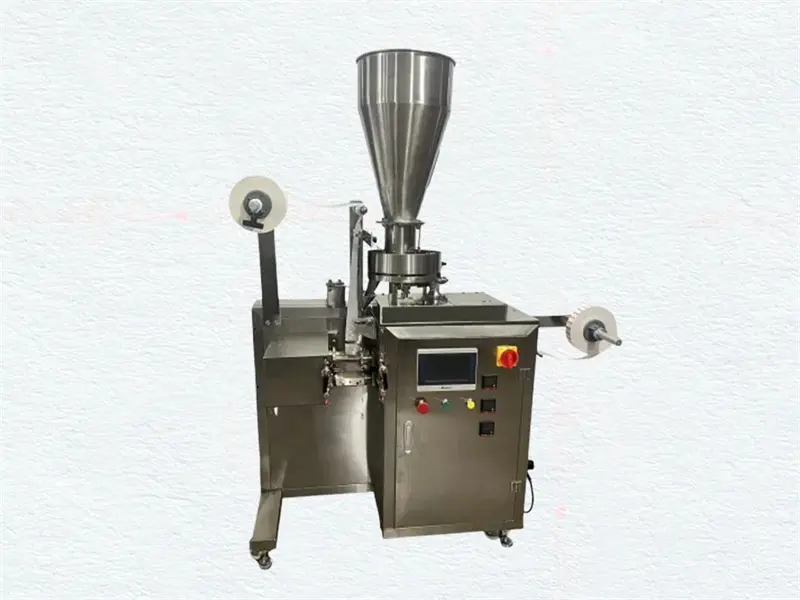
A tea bag packing machine is an automated system that measures tea, forms the filter bag, fills it with the correct weight, seals it, and—depending on the machine configuration—adds a string, tag, and individual outer envelope.
Modern equipment is designed to handle much more than traditional black tea. Many machines can package green tea, herbal blends, dried flowers, fruit infusions, medicinal herbs, and even certain coffee products.
Today's automatic tea bag packing machine can also integrate with coding systems, cartoning equipment, and case packing lines, allowing manufacturers to build a complete automated packaging solution.
How Does a Tea Bag Packing Machine Work?
Although manufacturers may use different designs, the production process follows the same basic sequence.
1. Tea Feeding
Production begins by loading tea into a stainless-steel hopper.
Depending on the product, the feeding system may handle:
-
Whole leaf tea
-
Broken leaf tea
-
Herbal mixtures
-
Flower petals
-
Tea granules
-
Fine tea powder
One important consideration is the nature of the tea itself. Whole-leaf teas require gentler handling to preserve their appearance, while finer materials benefit from more precise dosing systems.
2. Accurate Measuring
The machine automatically dispenses a predetermined amount of tea into each bag.
Common fill weights include:
-
1 g
-
2 g
-
3 g
-
5 g
-
8 g
-
10 g
Most modern tea packaging machines use electronic weighing systems that improve consistency and reduce product giveaway.
For premium teas, even a small variation in filling weight can affect cost over thousands of bags, making accurate dosing an important factor in long-term profitability.
3. Forming the Tea Bag
The filter material is fed from a roll into the forming section.
The machine folds and shapes the material before sealing the edges.
Depending on the model, manufacturers can produce:
-
Pillow tea bags
-
Square tea bags
-
Rectangular tea bags
-
Pyramid tea bags
-
Round tea bags
Pyramid bags have become increasingly popular because they provide more space for whole tea leaves to expand during brewing, improving flavor extraction and creating a premium appearance.
4. Filling the Bag
Once the bag has been formed, the measured tea is released into the pouch.
The filling process must be smooth enough to prevent excessive dust while maintaining production speed. A well-designed filling system also helps reduce material waste and minimizes machine downtime caused by blockages.
5. Heat Sealing
The bag is sealed using carefully controlled heat and pressure.
Reliable sealing is essential because weak seals can lead to leaking tea leaves, damaged packaging during transport, and customer complaints.
Food-grade sealing systems are designed to produce clean edges while maintaining the integrity of compostable and conventional filter materials.
6. String and Tag Attachment
Many premium tea brands include a cotton string and printed tag for convenience and brand recognition.
Modern automatic tea bag packing machines can attach these components automatically, eliminating manual labor and improving consistency.
Some manufacturers also choose staple-free sealing methods to create a cleaner, more sustainable product.
7. Individual Outer Envelope
For higher-end retail products, each tea bag is often packed into its own envelope.
Individual wrapping offers several advantages:
-
Better moisture protection
-
Improved aroma retention
-
Longer shelf life
-
Enhanced shelf presentation
Outer envelopes can be produced using kraft paper, laminated film, compostable materials, or customized printed packaging.
8. Finished Product Collection
Completed tea bags are transferred to a conveyor or collection tray.
From there, products may continue through additional equipment for counting, cartoning, shrink wrapping, or case packing before shipment.
Main Components of a Tea Bag Machine
A typical tea bag machine consists of several integrated systems working together.
| Component | Function |
|---|---|
| Hopper | Stores tea before filling |
| Feeding System | Transfers tea to weighing unit |
| Electronic Weigher | Measures accurate filling weight |
| Film Holder | Supports filter material roll |
| Bag Former | Shapes the tea bag |
| Heat Sealing Unit | Creates secure seals |
| String & Tag Device | Automatically attaches string and label |
| Date Printer | Prints production and batch information |
| Conveyor | Collects finished tea bags |
| PLC Control System | Controls machine operation |
 Choosing the Right Tea Bag Material
The packaging material directly affects brewing performance, product appearance, and sustainability.
PLA Mesh
PLA mesh has become a preferred option for premium tea brands because it is made from renewable plant-based materials.
Its transparent appearance allows consumers to see the whole tea leaves while providing excellent water circulation during brewing.
It is especially suitable for:
-
Whole leaf tea
-
Flower tea
-
Specialty blends
PLA Nonwoven Fabric
For finer tea particles or herbal powders, PLA nonwoven fabric offers excellent filtration.
It combines good strength with compostable performance and has become a popular alternative to conventional materials for environmentally conscious brands.
Nylon Mesh
Nylon mesh provides outstanding transparency and durability, making it suitable for pyramid tea bags.
However, many international tea brands have gradually shifted toward bio-based materials as sustainability expectations continue to increase.
PET Mesh
PET mesh offers stable sealing performance and high mechanical strength.
It remains a practical choice in markets where compostable packaging is not yet a primary purchasing requirement.
Heat-Sealable Filter Paper
Traditional filter paper continues to be widely used for classic tea bags because it is economical and performs well in high-speed production environments.
 Where Are Tea Packaging Machines Used?
The versatility of a tea packaging machine allows it to serve many different industries.
Common applications include:
-
Tea processing factories
-
Private-label tea brands
-
Herbal tea manufacturers
-
Organic tea companies
-
Coffee producers
-
OEM packaging facilities
-
Gift tea suppliers
-
Functional beverage manufacturers
Beyond tea, many machines can package dried herbs, botanical ingredients, spices, and coffee powder with minimal adjustment.
Why Manufacturers Invest in Automatic Tea Bag Packing Machines
Automation is no longer reserved for large factories.
Many growing tea businesses choose automated equipment because it delivers consistent quality while reducing dependence on manual labor.
Some of the key benefits include:
-
Higher production capacity
-
More accurate filling
-
Stable sealing quality
-
Reduced material waste
-
Improved product consistency
-
Lower operating costs over time
Production speeds typically range from 30 to 180 bags per minute, depending on machine configuration and bag style.
Real Buyer Scenarios
Every tea business has different production needs, which is why there is no one-size-fits-all solution.
A startup launching its first organic tea collection may only require a compact machine capable of producing a few thousand bags per day. Keeping the initial investment manageable while leaving room for future expansion is often the priority.
A contract packing company, on the other hand, usually values flexibility above all else. Since different customers request different bag sizes, filter materials, and packaging formats, quick changeovers become a major advantage.
Large tea manufacturers supplying supermarkets typically focus on production efficiency. For them, integrating an automatic tea bag packing machine with cartoning and case-packing equipment helps reduce labor while maintaining consistent output across multiple shifts.
Customization Options
One of the biggest advantages of modern packaging equipment is flexibility.
Manufacturers often customize machines based on production requirements, including:
-
Pyramid or flat tea bags
-
Filling ranges from 1–20 g
-
PLA mesh, PLA nonwoven, filter paper, PET, or nylon compatibility
-
Custom string colors
-
Printed paper tags
-
Individual outer envelopes
-
Date coding systems
-
Multi-language PLC interfaces
-
Voltage configurations for different countries
Selecting the right options at the beginning can reduce future upgrade costs and improve production efficiency.
Sourcing Considerations Before Buying
Choosing the right supplier is just as important as selecting the machine itself.
Instead of comparing only the purchase price, experienced buyers usually evaluate several factors together.
Machine stability should always come first. A lower-priced machine that experiences frequent downtime may become more expensive over its lifetime than a higher-quality alternative.
It's also worth confirming the availability of spare parts and technical support. Quick access to replacement components and responsive after-sales service can minimize production interruptions, especially for businesses operating during peak tea seasons.
Another point often overlooked is material compatibility. If your brand plans to use PLA mesh or compostable nonwoven fabric, make sure the machine has been tested with those materials. Not every machine designed for conventional filter paper performs equally well with biodegradable media.
Finally, ask for production videos, sample packaging, or factory acceptance testing before shipment. Seeing the equipment operate with products similar to your own provides much greater confidence than relying solely on technical specifications.
Tonchant's Manufacturing Experience
At Tonchant, we have worked with tea brands, importers, and OEM manufacturers across different markets for many years. Through these collaborations, we've found that successful projects begin with understanding the customer's product rather than simply recommending a machine.
For example, whole-leaf specialty teas packaged in pyramid bags require different material handling compared with finely cut herbal blends. Likewise, customers targeting premium retail shelves often prioritize elegant packaging and sustainable materials, while industrial packers tend to focus on production efficiency and easy maintenance.
Our engineering team works closely with customers to evaluate tea characteristics, production capacity, packaging materials, and future expansion plans before recommending equipment. This approach helps ensure the machine continues to meet production needs as the business grows.
In addition to supplying tea bag packing machines, Tonchant also provides compatible packaging materials—including PLA mesh, PLA nonwoven fabric, filter paper, and customized tags and outer envelopes—allowing customers to source a complete packaging solution from a single supplier.
MOQ
Packaging machinery generally has a straightforward purchasing requirement.
| Product | Typical MOQ |
|---|---|
| Tea bag packing machine | 1 set |
| Customized machine | 1 set |
| Spare parts | According to order |
| Packaging materials | Typically 50–500 kg |
Lead Time
Production schedules vary depending on the level of customization.
| Machine Type | Lead Time |
|---|---|
| Standard machine | 20–30 days |
| Customized machine | 30–45 days |
| Complete packaging line | 45–90 days |
Planning ahead is recommended, particularly before peak tea harvesting seasons when equipment demand tends to increase.
Certificates
Reputable manufacturers commonly provide:
-
CE Certification
-
ISO 9001 Quality Management
-
SGS Inspection Reports
-
FDA-compliant food-contact materials where applicable
-
RoHS compliance for electrical components
Always confirm which certifications are required for your destination market before placing an order.
Semi-Automatic vs. Automatic Tea Bag Packing Machine
| Feature | Semi-Automatic | Automatic Tea Bag Packing Machine |
|---|---|---|
| Production Speed | Lower | Higher |
| Labor Requirement | Higher | Lower |
| Filling Accuracy | Moderate | High |
| String & Tag | Manual | Automatic |
| Outer Envelope | Manual | Automatic |
| Product Consistency | Good | Excellent |
| Initial Investment | Lower | Higher |
| Long-Term Operating Cost | Higher | Lower |
| Best For | Small workshops | Commercial production |
Frequently Asked Questions
What is the difference between a tea bag machine and a tea packaging machine?
A tea bag machine focuses on forming, filling, and sealing tea bags. A tea packaging machine may include additional functions such as outer envelope packaging, date coding, cartoning, or integration with downstream packaging equipment.
Can one machine produce both pyramid and flat tea bags?
Some advanced models support interchangeable forming systems, allowing manufacturers to switch between pyramid and flat tea bags. Others are dedicated to a single format, so this should be confirmed before purchase.
Which filter material is best for sustainable packaging?
PLA mesh and PLA nonwoven fabric are among the most popular choices because they are made from renewable resources and are commercially compostable under appropriate disposal conditions.
How accurate is the filling system?
High-quality automatic tea bag packing machines generally achieve filling accuracy of approximately ±0.2–0.5 grams, depending on the product characteristics and weighing technology.
How much maintenance is required?
Routine maintenance is relatively straightforward and includes cleaning product-contact parts, inspecting sealing components, lubricating moving parts, and replacing normal wear items according to the maintenance schedule.
Can these machines package products other than tea?
Yes. Many machines can also package dried herbs, spices, botanical blends, flower petals, and selected coffee products, provided the filling system is suitable for the material.
Conclusion
Investing in the right tea bag packing machine is about much more than increasing production speed. The right equipment helps ensure accurate filling, reliable sealing, attractive presentation, and consistent product quality—all of which contribute to stronger customer satisfaction and lower operating costs.
Before selecting a tea packaging machine, take time to evaluate your production capacity, tea type, preferred bag style, packaging materials, and long-term business goals. Just as importantly, choose a supplier with proven manufacturing experience, dependable technical support, and the ability to provide compatible packaging materials alongside the equipment.
With careful planning and the right automatic tea bag packing machine, tea brands of every size—from emerging startups to established manufacturers—can build a more efficient production process while meeting today's growing expectations for quality, sustainability, and premium packaging.