
 EN
EN


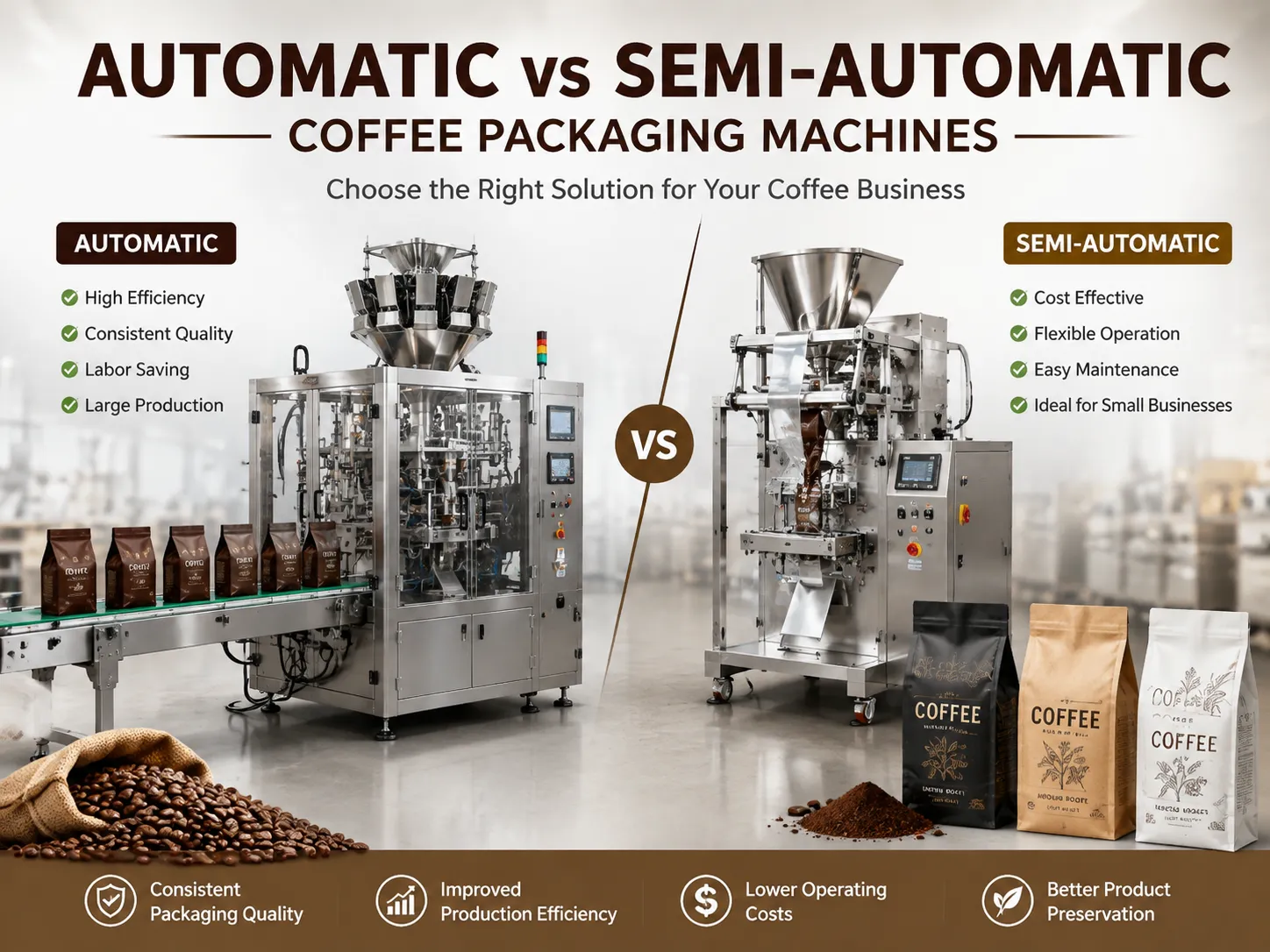




Fine powder products present unique challenges in automated packaging that standard machine specifications often fail to address adequately. Matcha — with a particle size of 5–10 microns — behaves almost like a fluid, making it susceptible to static cling, bridging in hoppers, and aerosolization during filling. Herbal tea powders, superfood blends, and finely milled spices share similar characteristics. For buyers sourcing a filling machine for these products, the standard coffee powder specification sheets from a packaging machinery manufacturer may not capture the engineering details that determine whether the machine will run reliably at production speed. This guide addresses the specific engineering requirements for fine powder and specialty herb filling operations.

The Three Core Challenges of Fine Powder Filling
1. Bridging and Hopper Flow Problems
Bridging occurs when fine powder particles pack together in the hopper, creating an arch over the outlet that interrupts product flow to the filling mechanism. At its most severe, bridging causes the filling auger to run empty — producing bags that are underweight and requiring manual intervention to restore flow.
Engineering solutions:
• Agitator paddles in the hopper break up powder bridges during continuous operation
• Vibration-assisted hoppers apply low-frequency vibration to the hopper walls to prevent packing
• Conical hopper geometry with steep angles (>70° from horizontal) reduces the likelihood of bridging compared to flat-bottomed hoppers
• Hopper venting allows displaced air to escape without pulling powder back with it
For matcha specifically, a vibration-assisted hopper with a stainless steel paddle agitator and a conical geometry is the minimum engineering standard.
2. Static Electricity and Dust Generation
Fine powders with low moisture content are prone to static electricity buildup during filling, which causes powder to adhere to machine surfaces, forming die walls, and bag interiors. This creates hygiene issues, cleaning complications, and interference with the sealing surface.
Engineering solutions:
• Anti-static filling nozzle coatings reduce surface adhesion
• Ionized air purge at the filling station neutralizes static charge during the filling cycle
• Reduced filling drop height minimizes aerosolization during the fill step
For organic matcha and herb powders destined for premium retail, filling machine cleanliness is a product quality issue — static-driven powder adhesion on bag surfaces is unacceptable to premium retailers and must be engineered out, not managed manually.
3. Sealing Integrity with Powder Contamination
Fine powders inevitably deposit on the bag sealing area during filling. A sealing surface contaminated with matcha or herbal powder can fail to seal properly, creating a weak seal that passes visual inspection but fails during distribution compression.
Engineering solutions:
• Seal area air wipe removes residual powder from the bag opening before the seal cycle
• Ultrasonic sealing (as discussed in Article 6) seals through contamination more reliably than heat-sealing
• Extended seal bar width (≥10 mm) provides more seal surface area to compensate for contamination at the edges
Filling Accuracy Requirements for Fine Powder
For fine powders sold to premium retail markets, fill accuracy requirements are tighter than for coarser products:
| Product | Target Fill Weight | Required Accuracy | Regulatory Reference |
| Ceremonial matcha (retail) | 30 g, 50 g, 100 g | ±0.5% | EU Directive 76/211/EEC |
| Herbal tea powder blend | 80 g, 150 g | ±1.0% | Internal quality standard |
| Superfood blend (e.g., spirulina) | 200 g, 500 g | ±1.5% | FDA 21 CFR Part 101.105 |
Achieving ±0.5% accuracy on a 30 g fine powder fill requires a load cell-verified auger filler — a higher-specification system than the standard volumetric cup or basic auger used for granular coffee applications.
> Filling matcha, herbal powder, or superfood blends at commercial scale?
> Contact Tonchant Pack's engineering team for a fine-powder filling machine specification →
> We handle the full range from standard coffee powder to ceremonial-grade matcha.